The BabyView camera
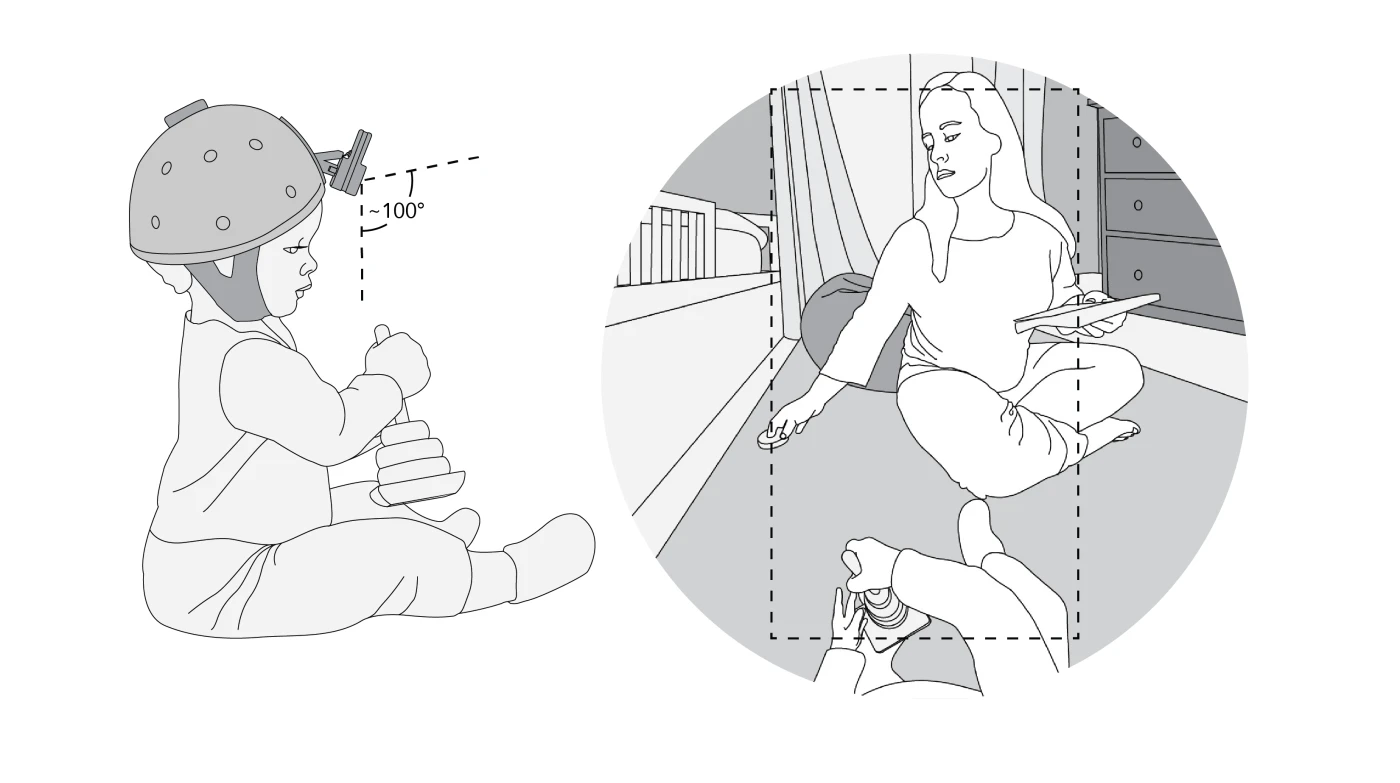
There isn’t just one BabyView camera. BabyView is a general design for recording high-resolution, egocentric video from children 6 – 30 months of age: a small consumer action camera mounted on a soft child safety helmet. We have built several versions of this design as cameras have been discontinued and as we have learned from families. Recordings in the dataset come from more than one version.
All materials – including design documentation, safety testing protocols, assembly instructions (with detailed photos), pilot data, data management protocols, and sample participant instructions – are available on the BabyView OSF page. The design process is described in our paper in Behavior Research Methods (Long et al., 2023; open-access version on PsyArXiv).
The general design
- A GoPro camera, for high resolution, good battery life, a built-in inertial motion unit (accelerometer and gyroscope), and wide availability.
- A soft child safety helmet (SafeheadBABY), which is comfortable, easy to modify, fits a wide range of ages, and bothers children less than headbands.
- A custom 3D-printed mount attaching the camera to the helmet (in version 1.0, a full 3D-printed enclosure).
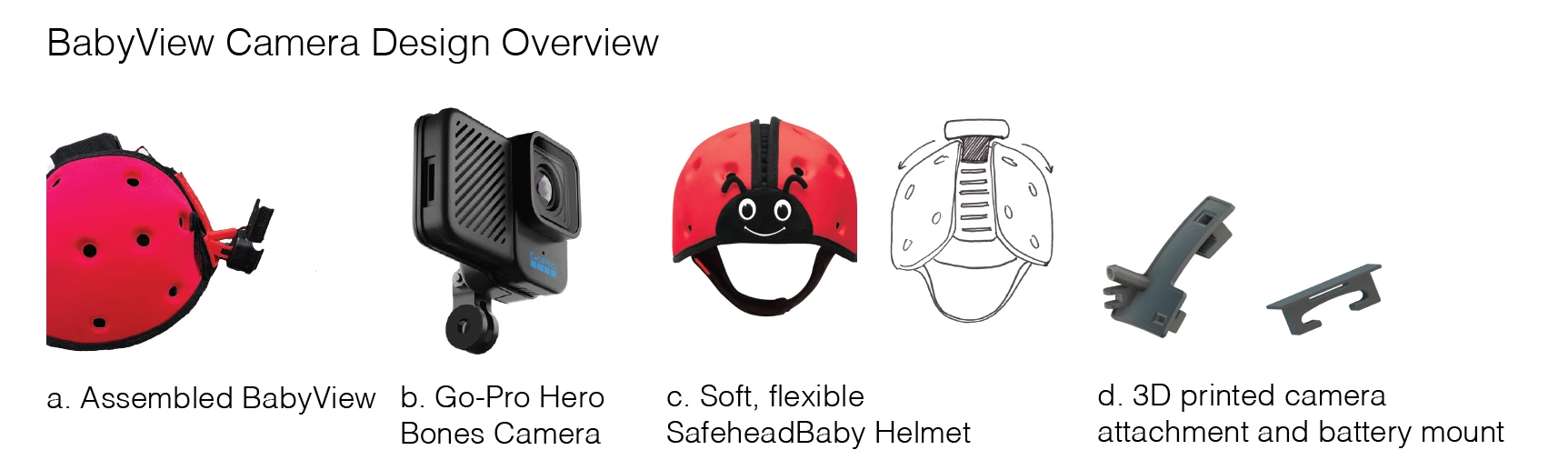
The parts of a BabyView camera, shown for version 2.0.
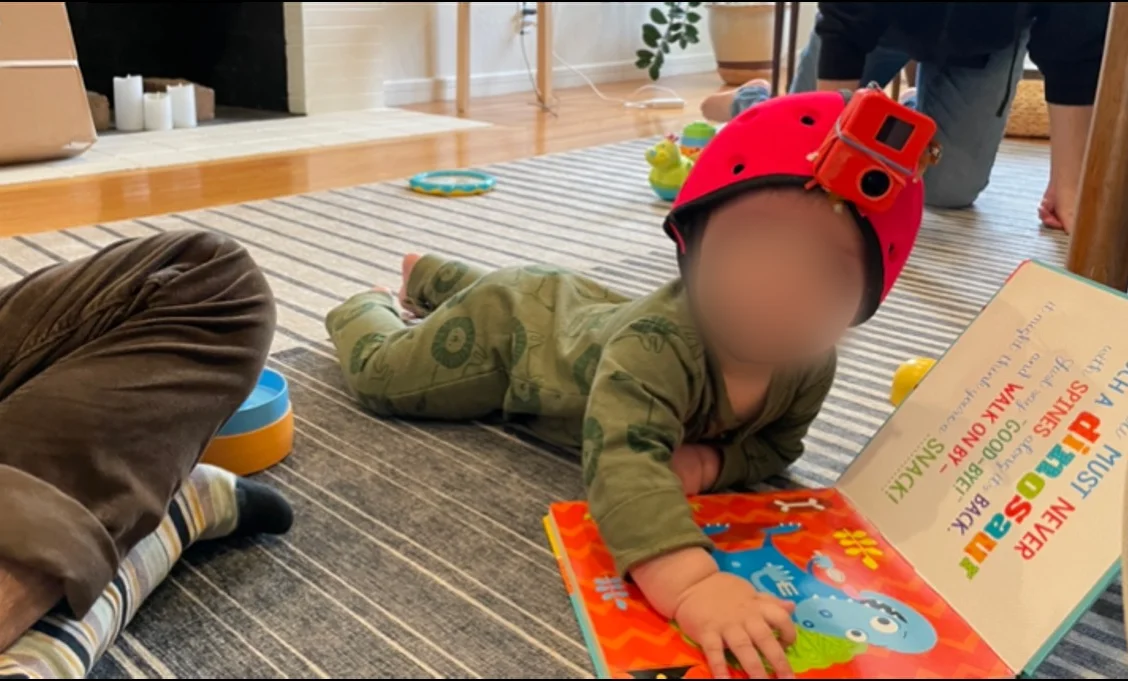
Our goal is to capture a toddler’s field of view and their interactions as accurately as possible. We orient the camera vertically, at an angle neutral to the face plane of the child, so that it captures both adult faces and objects in the child’s hands in the same image. The camera was developed in collaboration with Daylight, Inc., a product design firm in San Francisco, through over a year of prototyping and field testing.
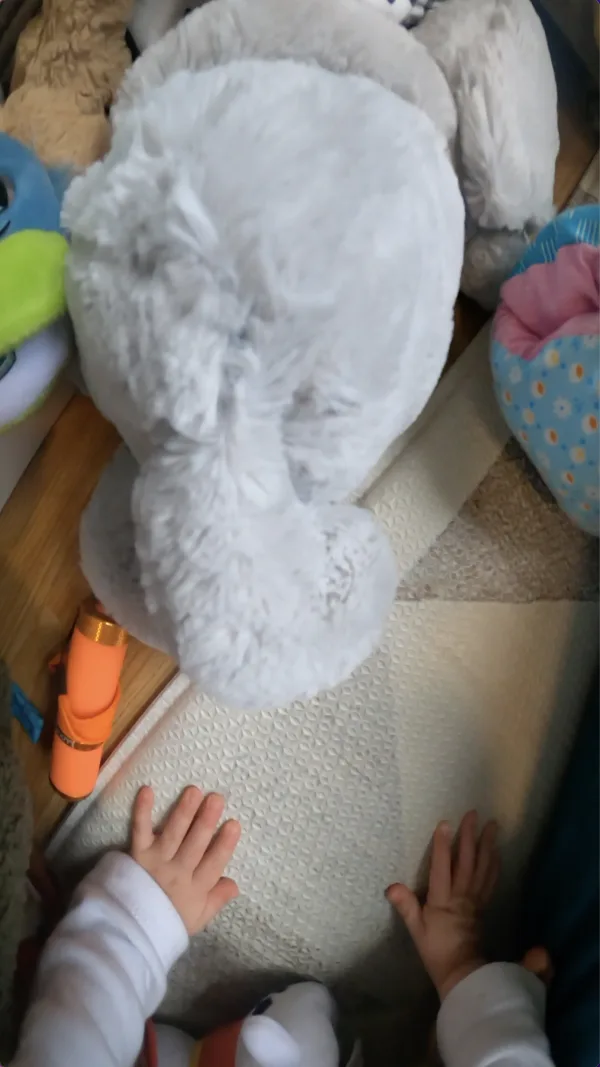
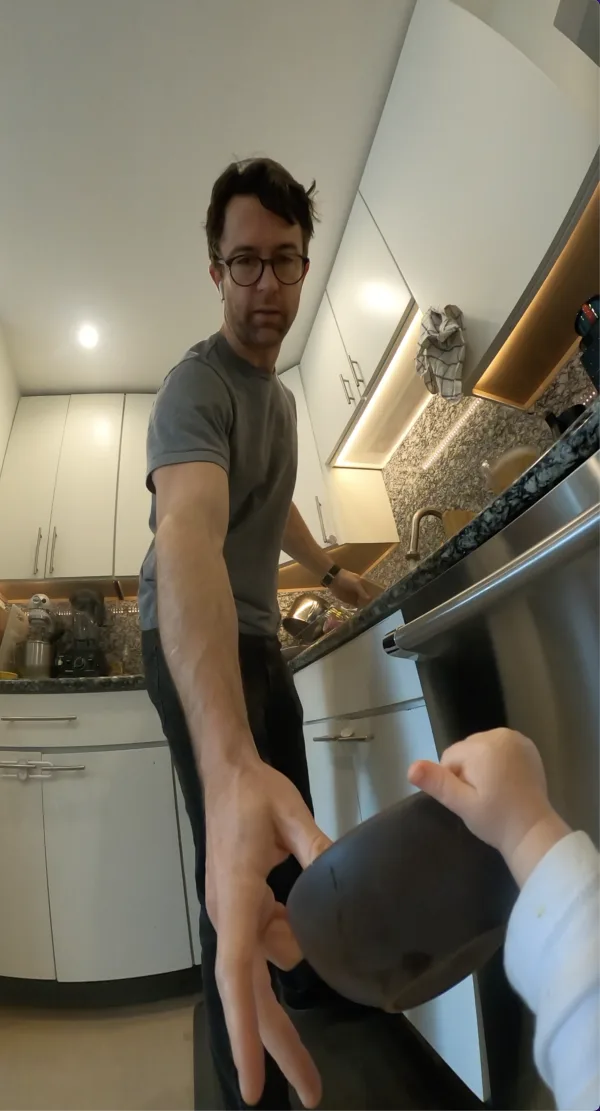
Example frames from BabyView pilot recordings, posted with permission.
Versions
Versions overlap in time: several builds are in use at once, so the dataset includes recordings from more than one version.
| Version | Camera | Attachment | Power | Status | Hours in dataset | Recording period |
|---|---|---|---|---|---|---|
| 1.0 | GoPro HERO8 Black | Full 3D-printed enclosure | – | Retired | – | – |
| 2.0 | GoPro HERO10 Black Bones | 3D-printed mount | External rechargeable 9V battery | In use (camera discontinued) | 1,987 | Mar 2023 – Nov 2026 |
| 3.0 | GoPro HERO (2024) | 3D-printed mount | Internal battery | In use | 1,790 | Aug 2025 – Nov 2026 |
| 3.1 | GoPro LIT HERO | 3D-printed mount | Internal battery | In use | 260 | Mar 2026 – Sep 2027 |
| 3.2 | – | New mount with a better view angle | – | In preparation | – | – |
Hours and recording periods come from the camera model recorded for each video. The Ego Single-Child dataset was recorded with a different camera (Headlight Camera 1080P; 81 hours).
BabyView 1.0
Our first build: a GoPro HERO8 Black in a fully 3D-printed enclosure on the helmet. This design has been retired.
BabyView 2.0
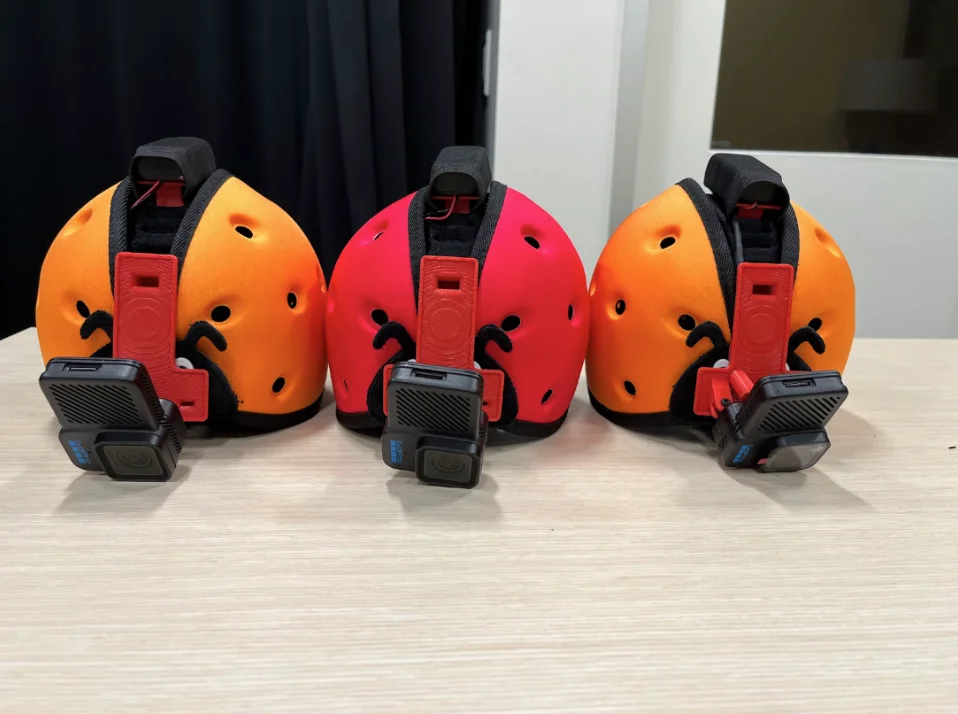
A rotated GoPro HERO10 Black Bones attached to the helmet with a custom 3D-printed mount, powered by a rechargeable 9V battery.
The Bones camera has since been discontinued, which led us to version 3.0.
BabyView 3.0
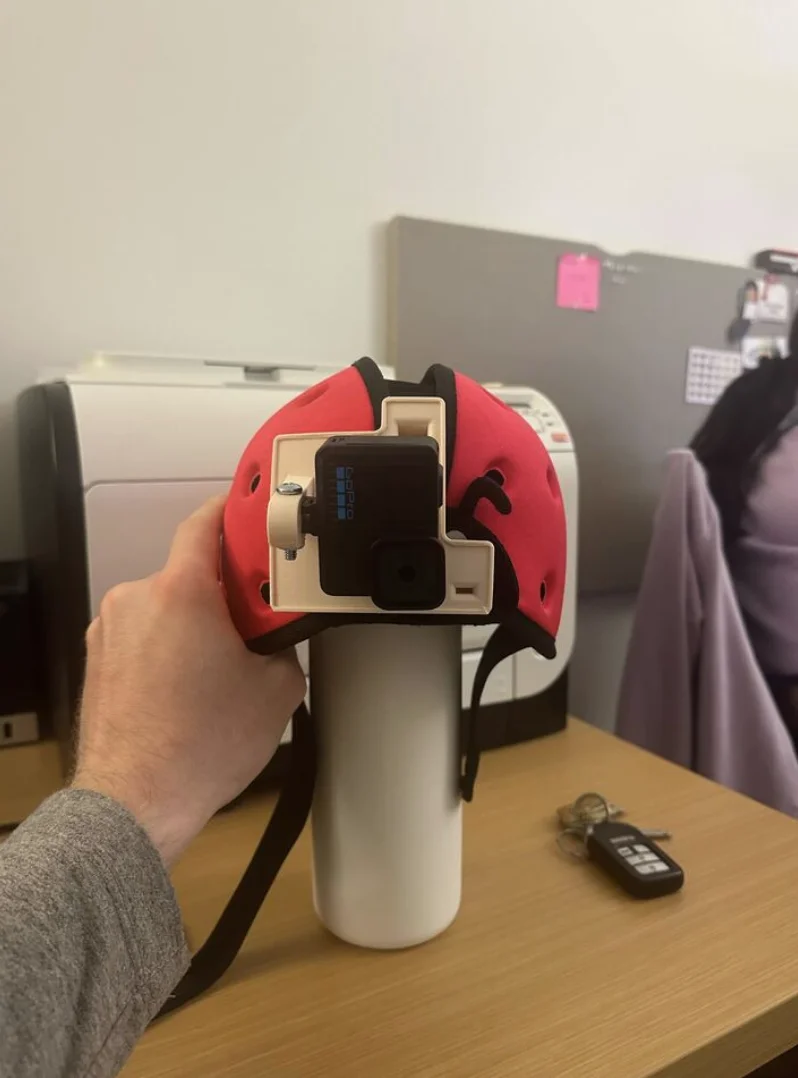
Built on the GoPro HERO (2024).
- No external battery, so the build is considerably simpler.
- The internal battery makes the camera easier for parents to use and allows longer recordings.
- It can still overheat in hot weather.
BabyView 3.1
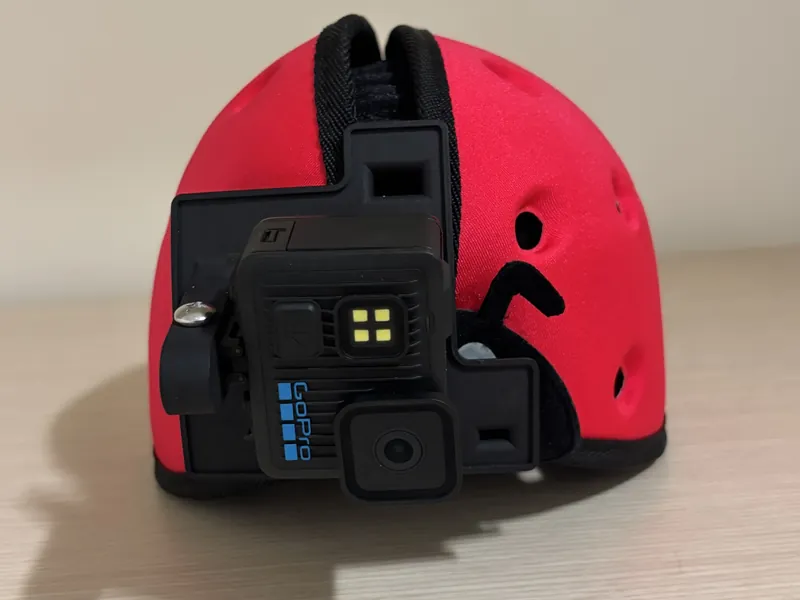
The 3.0 build with a different camera, the GoPro LIT HERO.
BabyView 3.2
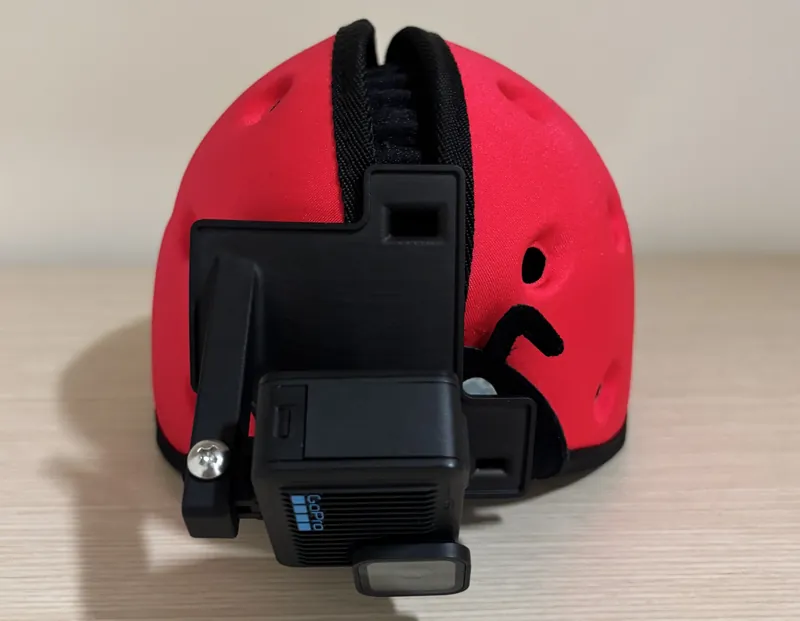
A new mount that gives the camera a better view angle.
Building your own BabyView
Here is a detailed guide to assembling your own BabyView camera, as well as a bill of materials (version 3.0) for each component; the custom mounts will need to be 3D printed (see the BabyView OSF page for CAD files). The instruction manual for parents (version 3.0) is also available.